
How to Add PPP Pricing to Your SaaS (Step-by-Step)
Your SaaS price makes sense in the US. In half the world, it can feel like rent. Here’s how to add purchasing power parity pricing without rebuilding your checkout.
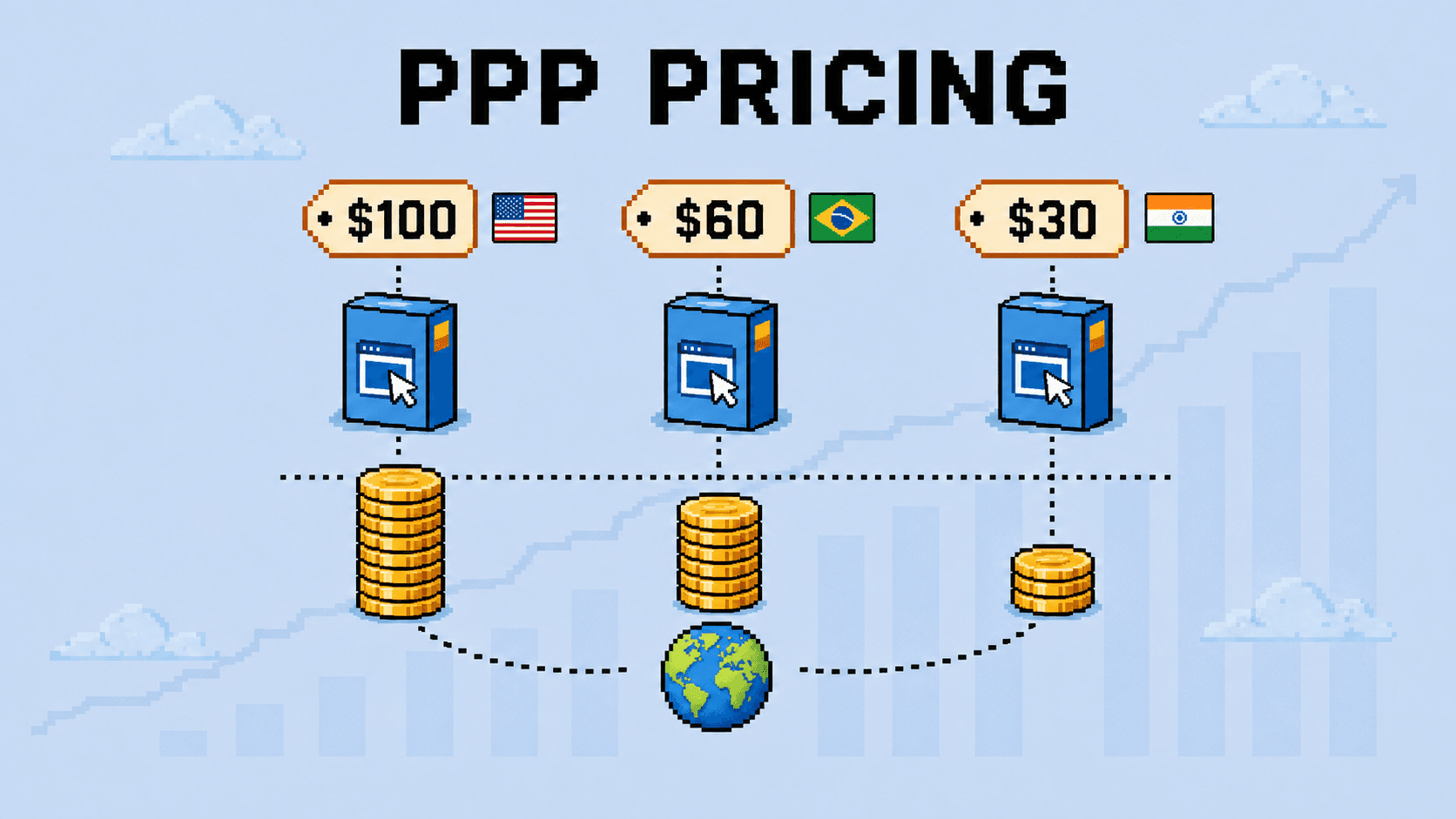
Say your SaaS costs $29 a month. For someone in the US, that might be lunch and coffee. For a developer in Brazil, India, or Nigeria, it can be a painful chunk of their monthly income.
They don't leave because your product is bad. They leave because the price was built for a completely different economy.
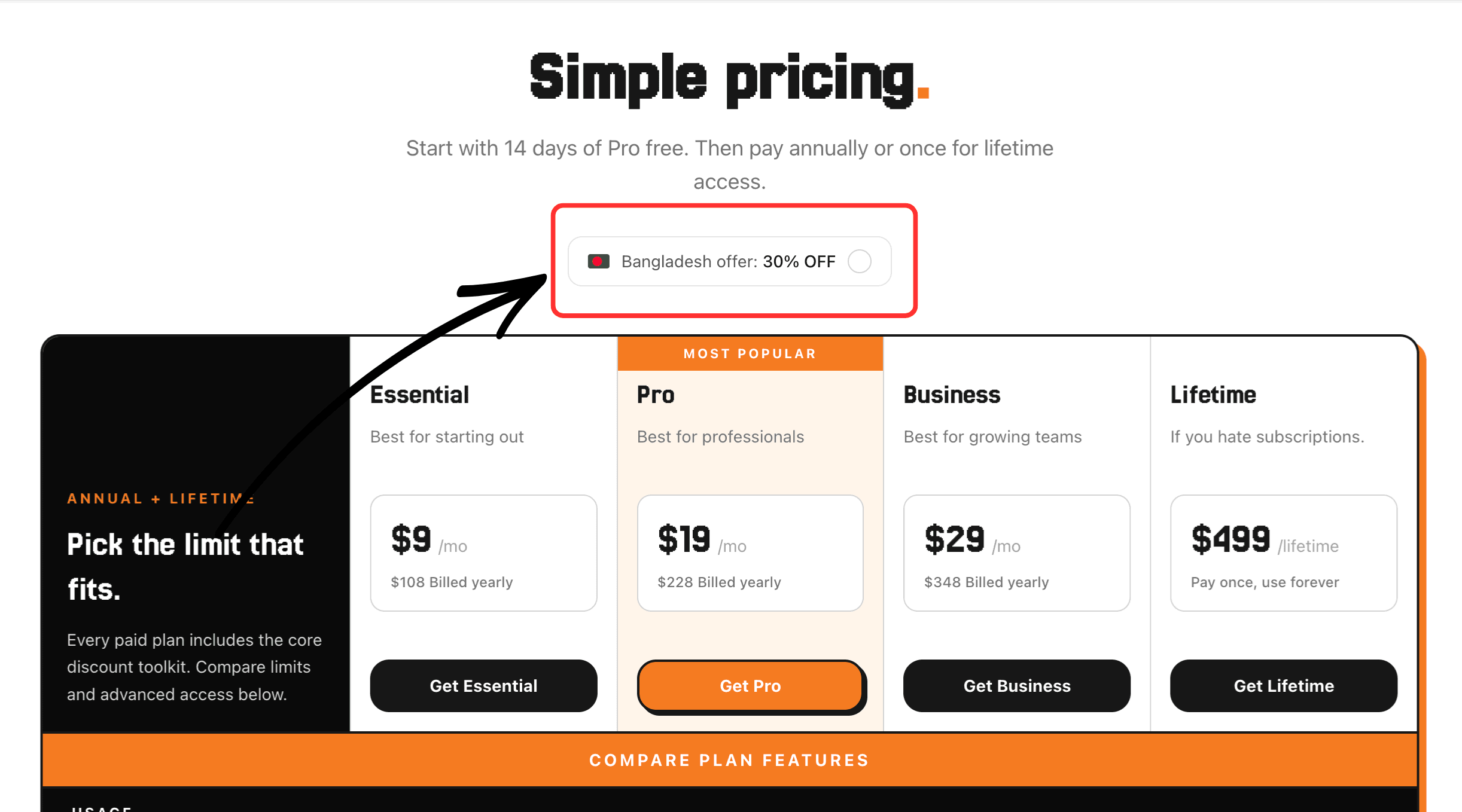
I'm from Bangladesh. I've been on that side of the pricing page more times than I can count. And if your SaaS gets traffic from around the world, some of your best potential customers are probably doing the same thing right now: checking the price, doing the math, and closing the tab.
What Is PPP Pricing for SaaS?
Purchasing power parity pricing adjusts your SaaS price or discount based on what money can actually buy in each country.
Your $29 plan stays $29 in the US. A customer in Brazil might get 25% off. Someone in India might get 40% off. Same product. Same value. Just a price that makes sense where they live.
This is different from currency conversion. Turning $29 into rupees changes the number on the screen. It doesn't make the plan more affordable. PPP pricing does.
What You Need
You can get this running without rebuilding your billing system.
- Your SaaS pricing or checkout page URL
- An Evendeals account with a product and deal
- A supported payment provider, or a checkout that accepts coupon codes
- About 10 minutes
Evendeals connects directly with Stripe, Lemon Squeezy, Dodo Payments, Creem, Polar, WooCommerce, and FastSpring. If you use something else, you can still add the coupons manually.
How to Add PPP Pricing to Your SaaS
Step 1: Choose Your Country Discounts
Don't start by giving every country 50% off. Start with a few sensible groups.
Enter your normal price in the free regional pricing calculator to get a country-by-country starting point. Then round the results into simple discount tiers your payment provider can manage.
| Market group | Examples | Starting discount |
|---|---|---|
| Full price | US, UK, Canada, Australia | 0% |
| Moderate discount | Brazil, Mexico, Turkey | 15–25% |
| Deeper discount | India, Bangladesh, Nigeria, Vietnam | 30–50% |
These aren't laws. They're a starting point. Your margins, product category, and conversion data still matter.
Step 2: Create Your Product and Deal
- Sign in to Evendeals and create your SaaS product
- Create a deal for the plan or offer you want to localize
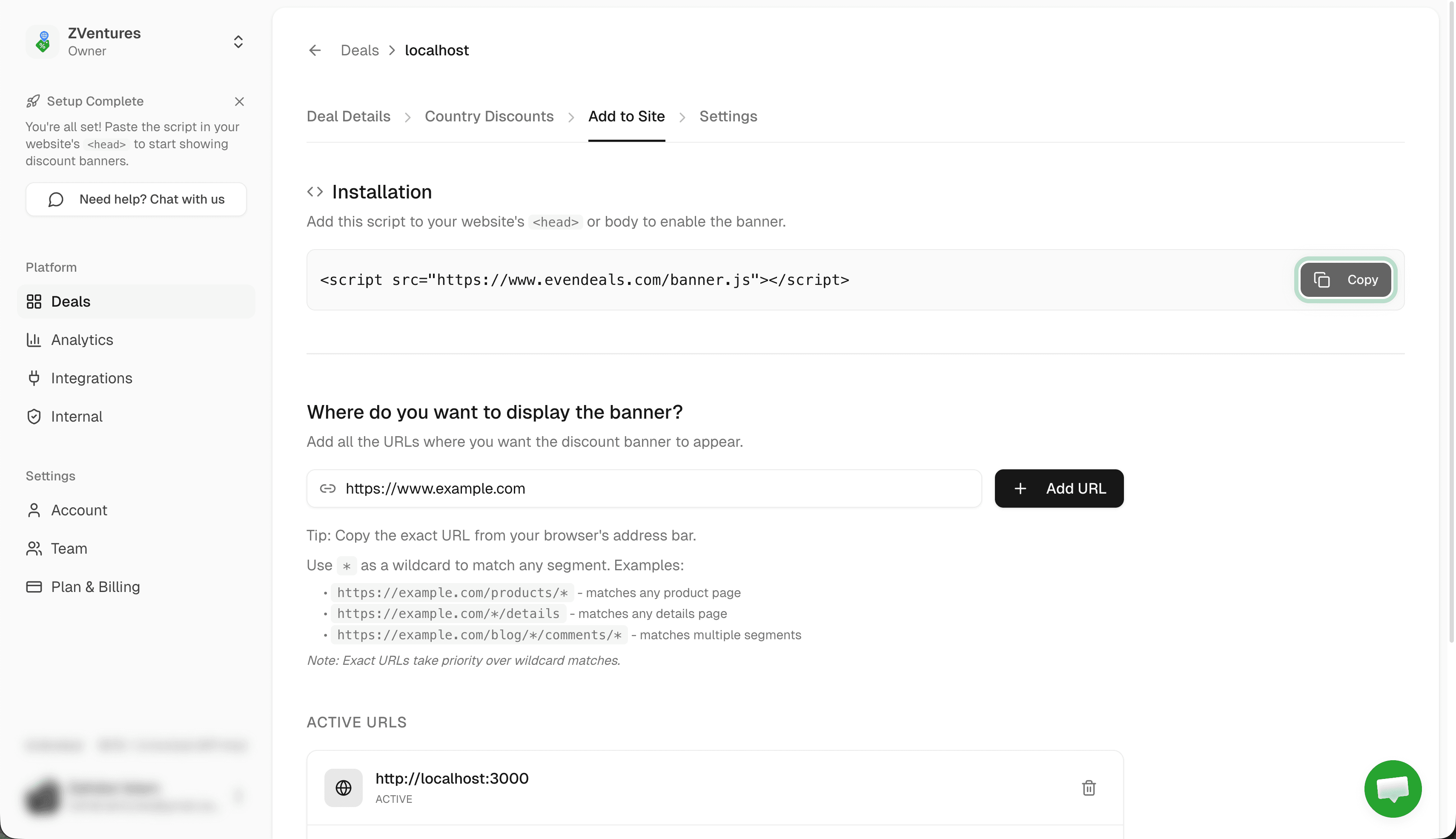
- Open Where to display
- Add your pricing page URL, such as
https://yourapp.com/pricing
The URL rule matters. It tells Evendeals where the offer should show, so your discount doesn't randomly appear on your docs or login page. That would be awkward.
Step 3: Connect Your Payment Provider
- Go to Dashboard → Integrations
- Connect your payment provider
- Link the right SaaS product or plan
- Sync your country discounts
Evendeals creates the matching coupons in your connected provider. So a 30% tier in Evendeals gets a real 30% checkout coupon. No spreadsheet full of codes. No late-night copy-paste session.
Using an unsupported checkout? Create the coupons there first, then enter the exact same codes in Evendeals. It's more manual, but it works.
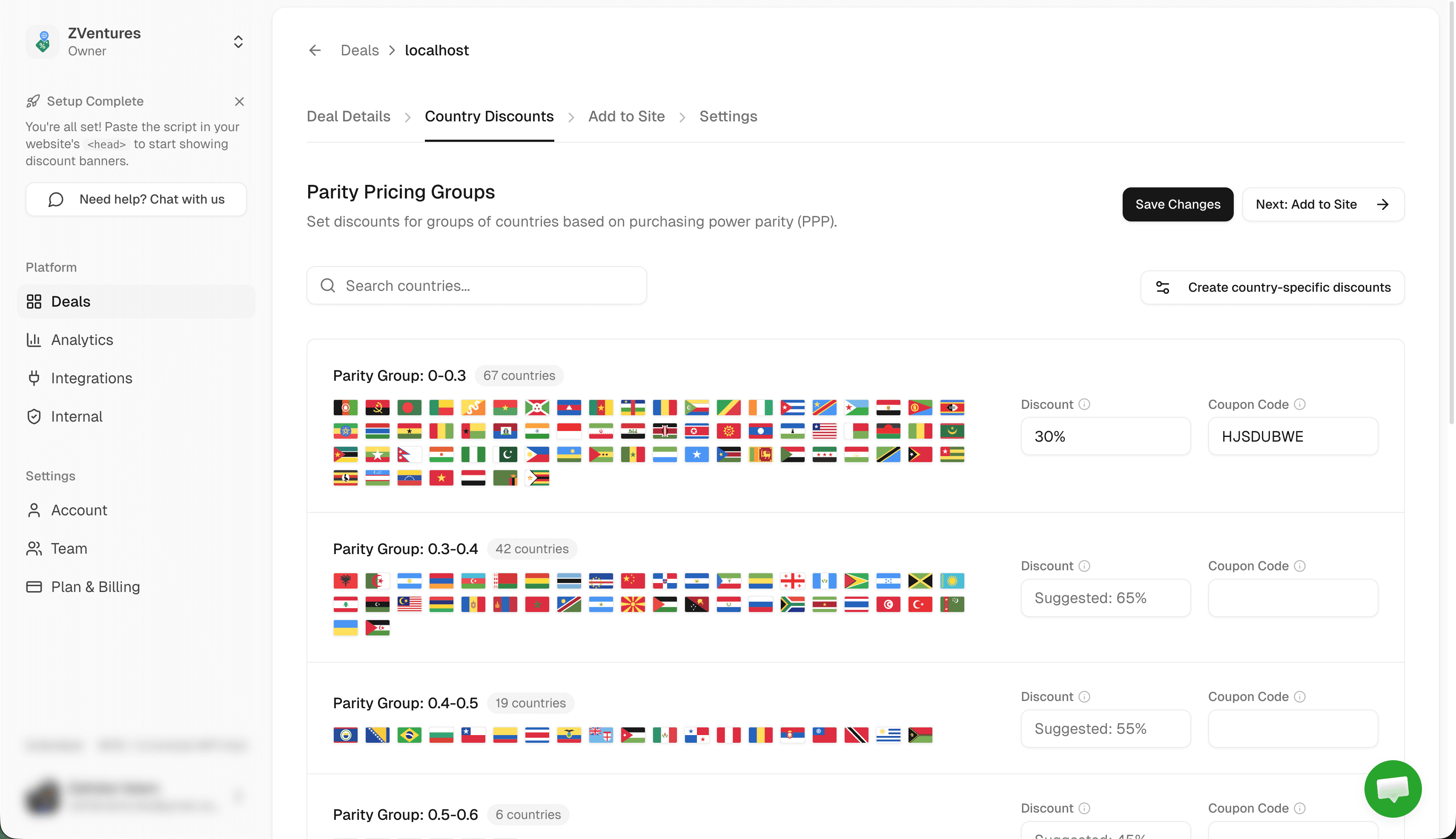
Step 4: Configure Your PPP Groups
- Open Country Discounts
- Choose the countries in each group
- Set the discount percentage
- Save and sync the changes
Step 5: Choose How the Offer Appears
You've got four options:
- Banner: fastest setup. Add one script and show a ready-made offer at the top or bottom of the page.
- Popup: show the offer after a delay, on scroll, or when someone is about to leave.
- Custom display: put the country, discount, and coupon inside your own pricing design using CSS classes.
- API: fetch the discount in your frontend or backend and control the whole experience yourself.
If you just wanna ship, use the banner. If you need to change the displayed plan price or auto-apply a coupon at checkout, use the API mode.
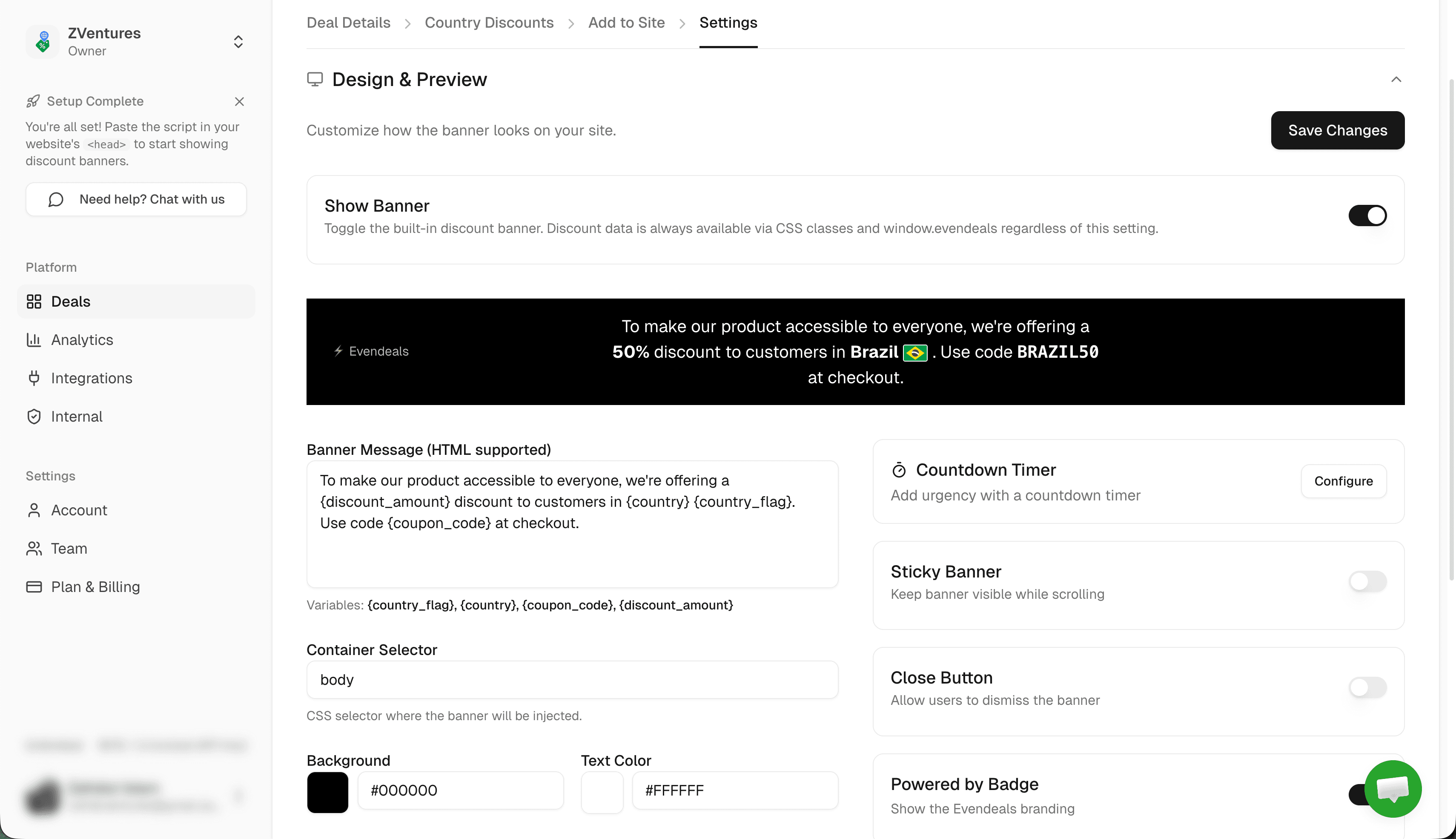
Step 6: Install It on Your SaaS
For the banner, popup, or custom display mode, add this before your closing </body> tag:
<script src="https://www.evendeals.com/banner.js"></script>Where it goes depends on your stack:
- Next.js: add it with
next/scriptin your root layout - React or Vue: add it to your main HTML template
- Webflow or Framer: add it to the site's custom code area
- WordPress: use the Evendeals plugin or add the script before
</body>
If your SaaS uses Next.js and you want server-rendered prices, the Next.js PPP pricing guide walks through all three integration approaches.
Step 7: Test Before Launching
- Temporarily add your own country to a discount group
- Open your pricing page in a private window
- Confirm the correct country, percentage, and coupon appear
- Run a test checkout and verify the coupon works
- Put your country back in the correct group
Then voilà. Your SaaS has country-based PPP pricing without a second pricing page, a new billing system, or 190 hard-coded prices.

What the Customer Sees
Let's use a $49 SaaS plan as an example.
- A visitor from India opens your pricing page
- Evendeals matches them to your 40% discount group
- They see a local offer and coupon code
- They continue to your normal checkout
- The coupon drops the plan to $29.40
A visitor from the US sees the normal $49 price. Nothing changes for them.
What About VPNs and Coupon Sharing?
This is the honest downside of PPP pricing. If your Indian price is cheaper, someone will eventually try to look Indian for five minutes.
Paid Evendeals plans can block VPN, proxy, and Tor traffic from receiving the offer. Auto-refresh coupons can also rotate a code after a set number of views, so a leaked coupon doesn't live forever.
It won't make abuse mathematically impossible. Nothing does. But it removes the easy version of the trick while keeping the experience simple for real customers.
What to Track After You Launch
Don't judge PPP pricing by discount usage alone. Watch:
- Pricing-page conversion rate by country
- New MRR from discounted markets
- Revenue earned per discount dollar
- Refunds and churn by country group
- Coupon views versus completed purchases
Give it enough traffic to mean something. Then adjust one group at a time. If Brazil converts well at 20%, don't rush to offer 40%. If India still doesn't move, test a deeper discount.
FAQ
Does PPP pricing change my normal SaaS price?
No. Your base price stays the same. Eligible visitors receive a country-specific discount through your existing checkout.
Does PPP pricing work with SaaS subscriptions?
Yes. You can use country-specific coupons with monthly, annual, or one-time prices, as long as your payment provider supports them.
How much should I discount in each country?
Start with broad 15–25% and 30–50% groups, then use your conversion data to adjust. The regional pricing calculator gives you a more detailed starting point.
Can the coupon be applied automatically?
Yes, when your checkout supports a coupon parameter or API. Use Evendeals API mode to fetch the right offer and pass its coupon code into your checkout flow.
Will the script slow down my SaaS?
The script is lightweight and asynchronous, so it doesn't block the page from rendering. You can also use the server-side API if you prefer not to load a client script.
Next Steps
Start small. Pick two discount groups. Add them to one pricing page. Then watch what happens to international signups.
If you want the setup handled for you, try Evendeals for SaaS. Every new account starts with a 14-day Pro trial, so you can test the full flow before deciding whether it's worth keeping.
And if you get stuck, message us. You'll reach a founder, not a support maze. Thanks for reading.
Add PPP Pricing to Your SaaS